Crypto funding rounds generate a steady stream of headlines: a startup "raises $50 million at a $500 million valuation," a "strategic round" closes with a famous fund attached, an exchange lands a "growth investment." These announcements are marketing documents as much as news. The company chooses what to disclose, how to label the round, and which investors to name first. Learning to read one carefully — and to notice what it leaves out — is a practical skill for anyone who uses crypto products, works in the industry, or follows the market.
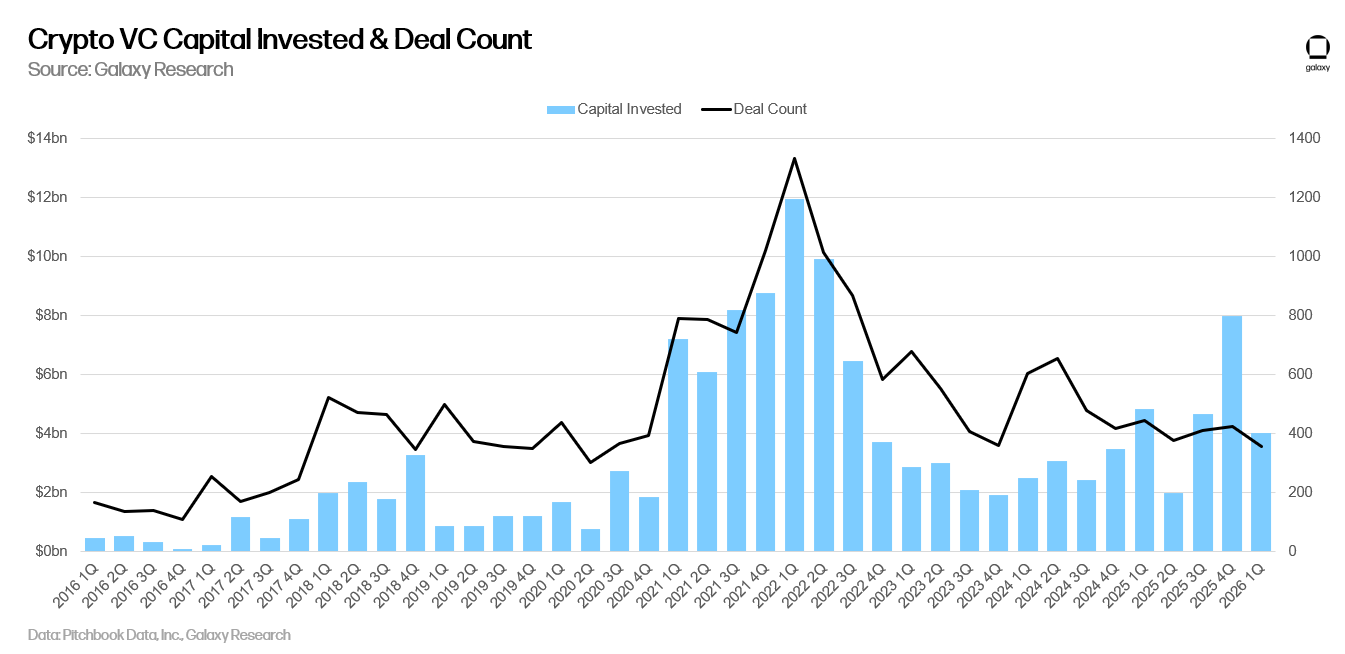
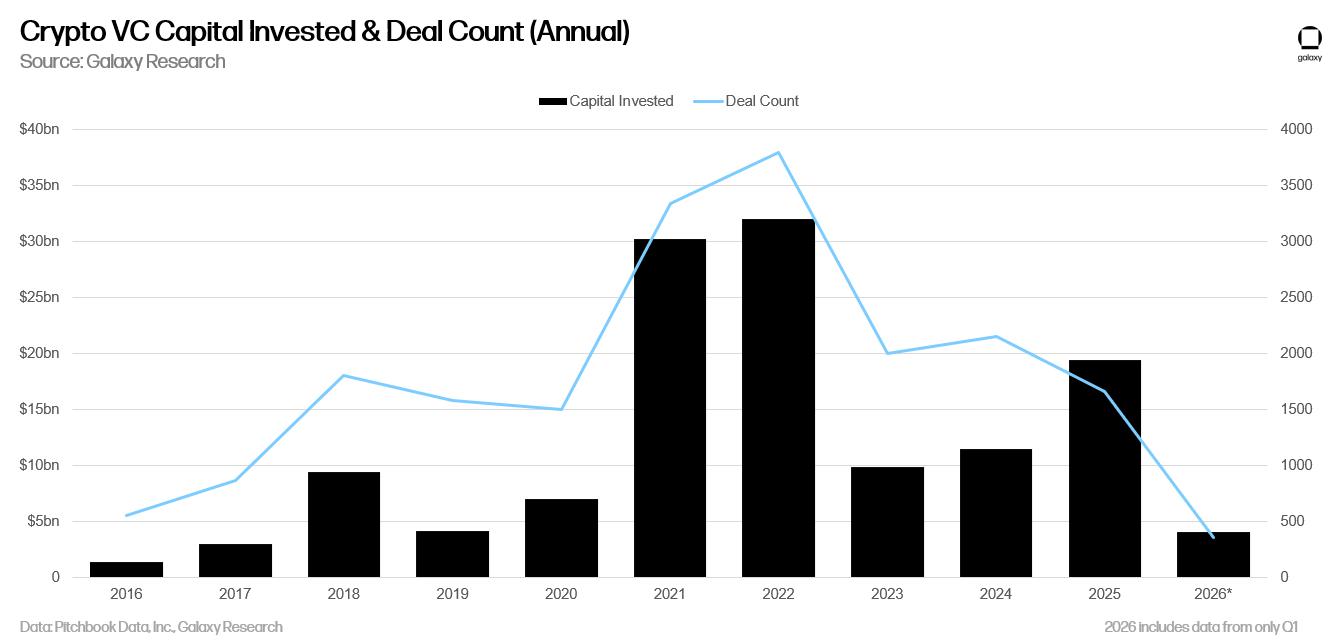
The raw material for that skill is abundant. Galaxy Research counted roughly $20 billion invested across 1,660 crypto funding rounds in 2025, the sector's biggest year since 2022, and about $4 billion more across 355 deals in the first quarter of 2026. Almost every one of those deals produced an announcement. This guide breaks down the anatomy of one: what each line actually means, which numbers are reliable, and which claims deserve skepticism.
Quick solution
When a funding announcement crosses your feed, check five things in order. First, the round label: seed, Series A, Series B, or growth tells you the company's maturity, while vague labels like "strategic round" often signal a raise that did not fit the standard ladder. Second, the amount: is it committed equity capital, or does it bundle debt, credit lines, or token commitments to inflate the headline? Third, the lead investor: a named lead who took a board seat is a stronger signal than a long list of small participants. Fourth, the valuation: most companies do not disclose one — Galaxy Research had valuation data for only 12% of Q1 2026 deals — so a disclosed valuation is a deliberate choice, usually made because the number flatters. Fifth, the date: money closed months before the announcement is common, and the announcement usually lands when the company wants attention, such as before a product launch or during a hiring push. If all five check out, you have a genuinely informative announcement. Our overview of how crypto startups raise venture capital covers the stage ladder behind those labels in detail.
A standard funding announcement contains six elements: the round label, the amount, the investor list, the valuation (sometimes), the use-of-proceeds paragraph, and a quote. Each is chosen, not required.
The round label maps the company onto the venture ladder. Seed means a first institutional check against an early product; Series A and B mean institutional money against demonstrated traction; growth or Series C+ means a scaled business raising large sums. Labels are not regulated, though. A company that raised a "Series A" in 2022 and needs money now, at a price its investors will not raise, may announce a "Series A extension" or a "strategic round" — real terms of art that often mean the valuation stayed flat or fell. If you see a round with no letter attached, ask why. Our guide to seed funding for crypto startups explains what the first rungs of the ladder look like from the inside.
The amount is the headline number, and it is the one most often inflated. Watch for phrases like "up to $100 million" (a facility, not a check), "in equity and token commitments" (some of the money buys future tokens, not shares), or "including debt financing" (borrowed, not invested). The clean formulation is simple: the company "raised $X million in Series B funding led by Y."
The investor list is ordered by marketing value, not check size. The lead investor — the fund that priced the round and usually took a board seat — matters most. A round "with participation from" twenty famous names may mean each wrote a small check. Corporate investors and exchange venture arms signal partnership potential; a lead you have never heard of is worth a search.
What the market context tells you
An announcement only means something against the backdrop of the market it happened in, and the market swings hard. Crypto venture activity has historically tracked crypto prices — surging in 2017 and 2021 alongside bitcoin — though Galaxy's data shows that link loosening: bitcoin set new highs in late 2025 while venture dollars recovered far more modestly, and both cooled together in early 2026.
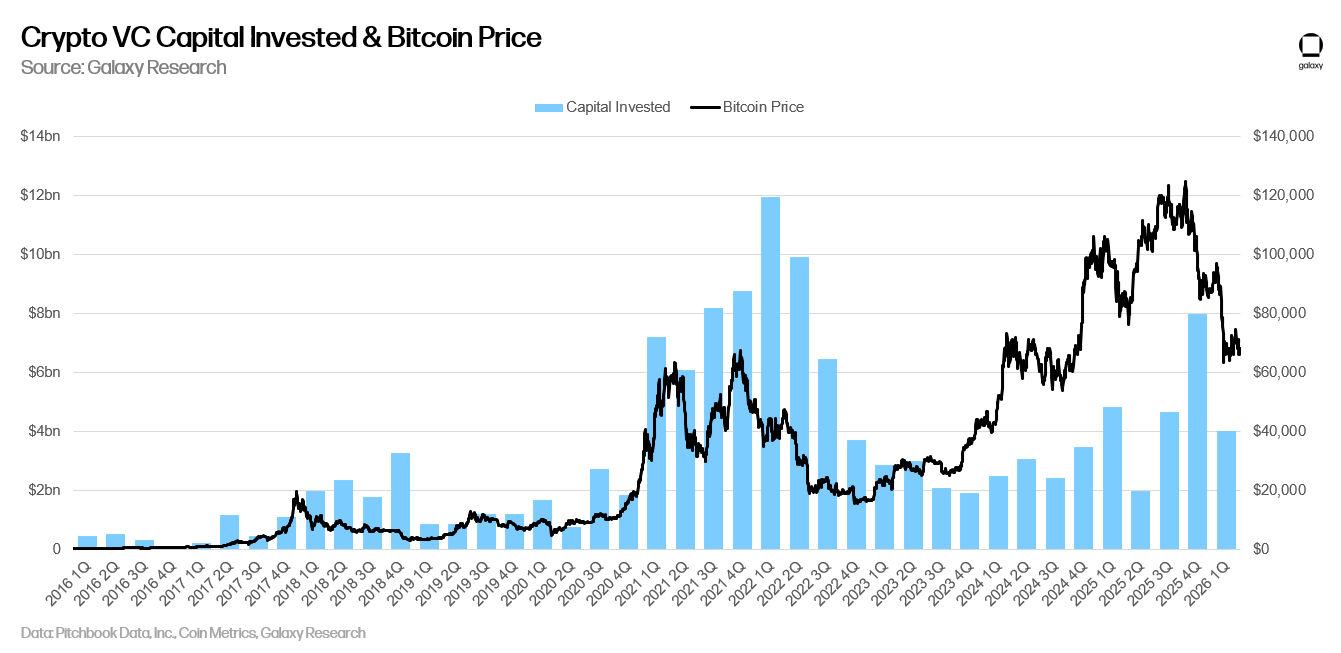
Why does this matter for reading a single announcement? Because the same raise means different things in different quarters. A $30 million Series A closed in a quarter when $12 billion was flying around is routine; the same round closed in a trough quarter is a strong endorsement, because investors were saying no to almost everyone. Q4 2025 is a case study in the other direction: $8.5 billion was invested, but 11 mega-deals of $100 million or more — Revolut's $3 billion round, Tempo's $500 million, Kraken's $800 million among them — accounted for roughly 85% of the total. In a quarter like that, headline totals say little about how hard it was for a typical startup to raise.
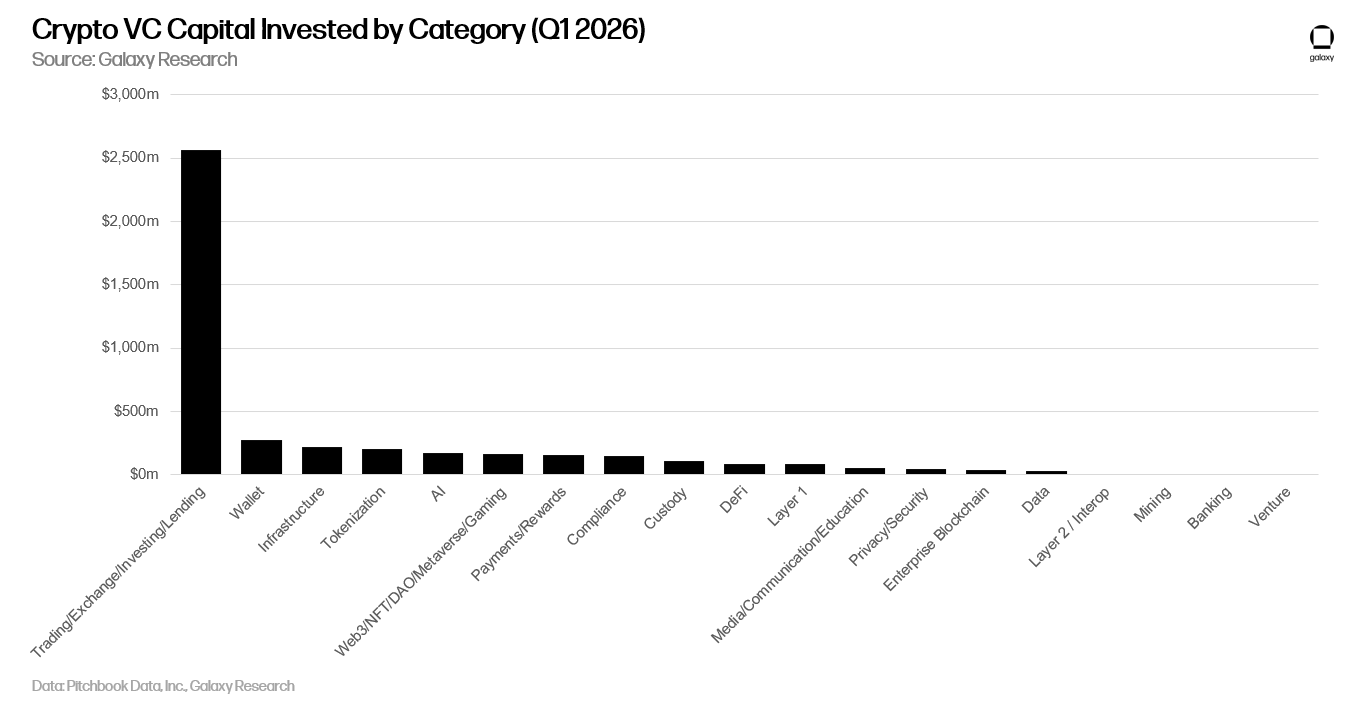
Sector matters just as much. In Q1 2026, companies in Galaxy's Trading/Exchange/Investing/Lending category captured about $2.6 billion — roughly three-fifths of all capital invested — while wallet companies ranked a distant second at about $270 million. An announcement from a trading platform competes for attention in a crowded, well-funded lane; a similar-sized round in compliance or custody is rarer and often more telling.
More in Venture & Funding
Decoding the numbers that are usually missing
The most important number in most announcements is the one that is not there: the valuation. Galaxy Research notes it had valuation data for just 12% of deals completed in Q1 2026. Companies disclose valuations when the number helps them — a big step-up that impresses customers and recruits — and stay quiet when it does not.
When a valuation is disclosed, check whether it is pre-money (the company's value before the new cash) or post-money (after). A "$100 million raise at a $500 million valuation" usually means post-money, so existing shareholders' stake was priced at $400 million. The difference changes dilution math meaningfully at smaller scales.
Also missing from nearly every announcement: the terms. Liquidation preferences, board composition, token rights, and investor protections shape who actually wins from a deal, and none of them appear in a press release. In crypto specifically, many equity rounds carry side agreements granting investors a share of a future token launch. Two announcements with identical headline numbers can hide very different deals underneath. How investors and founders actually negotiate the number is covered in our guide to crypto startup valuation.
The table below compiles the announcement elements side by side — what each one is, and the question a careful reader should ask of it. The pattern across all six: every element is optional or shapeable, so the reliable signal is what a company chooses to omit.
| Announcement element | What it claims | The question to ask |
|---|---|---|
| Round label | Company maturity (seed, A, B, growth) | Is the label standard, or a vague term hiding a flat round? |
| Amount | Cash invested | Equity only, or padded with debt, facilities, or token commitments? |
| Investor list | Who believes in the company | Who led and took the board seat, versus who wrote a token check? |
| Valuation | What the company is worth | Pre- or post-money — and why did they choose to disclose it? |
| Use of proceeds | What the money funds | Specific plans, or boilerplate about "accelerating growth"? |
| Timing | Recency of the milestone | When did the round actually close relative to the announcement? |
Who is announcing, and how old are they
One under-read signal in funding news is the age of the company. Galaxy's Q1 2026 data breaks down capital by the year the startup was founded, and the pattern is striking: companies founded in 2017 and 2018 pulled in some of the largest capital totals in Q1 2026 — the 2018 cohort alone attracted about $1.3 billion — while the number of deals skews toward companies founded in 2024 and 2025.
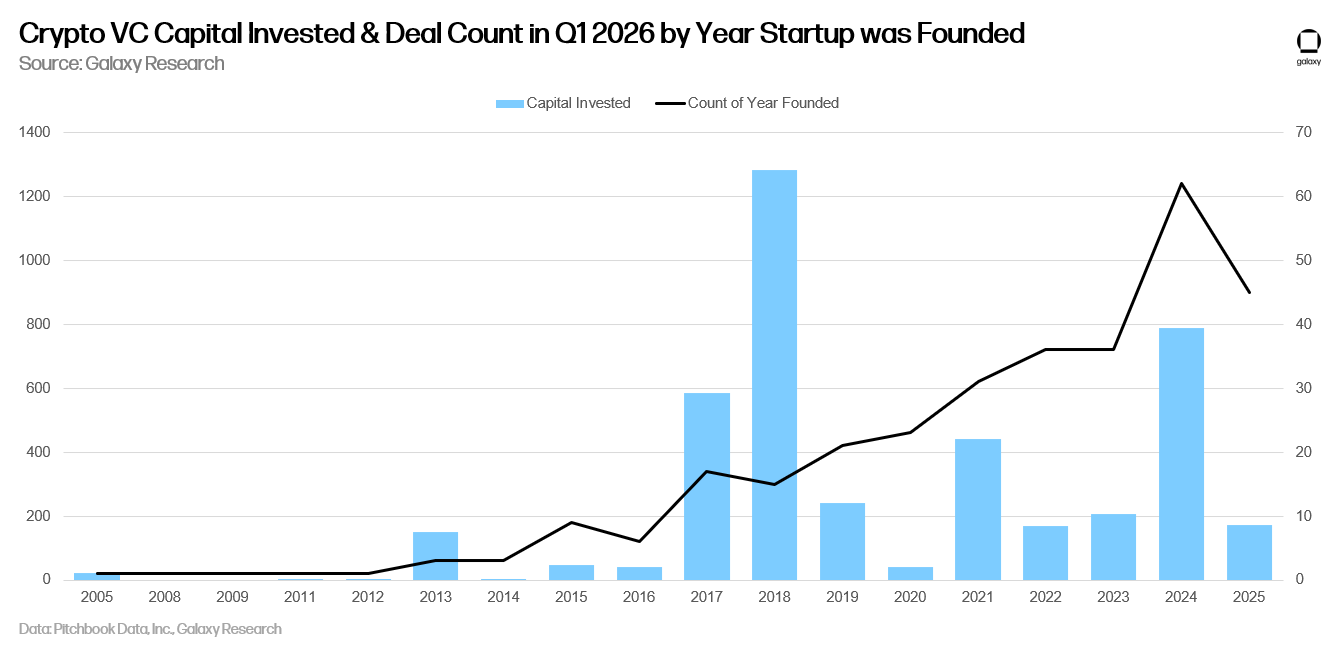
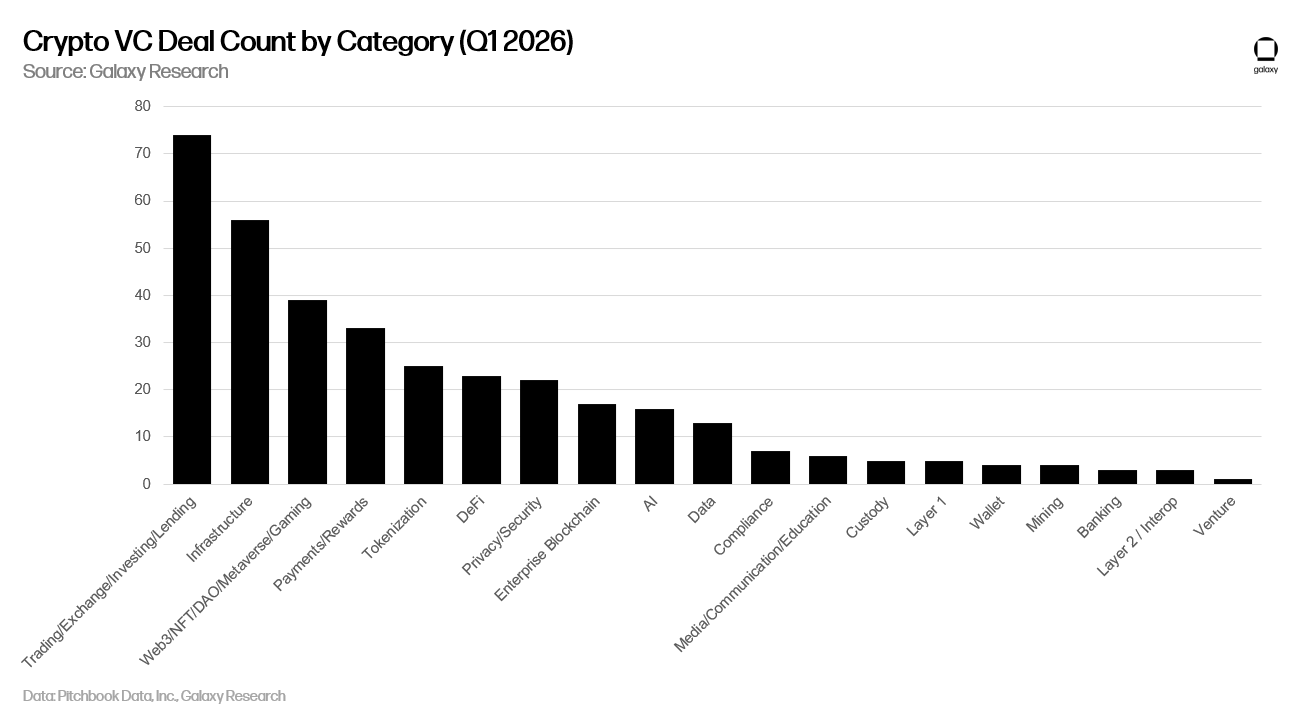
Translated into announcement-reading terms: the big dollar headlines mostly come from companies that survived one or two full market cycles, while the volume of announcements comes from young startups raising small early rounds. A seven-year-old company announcing a $200 million growth round and a seven-month-old company announcing a $4 million seed are both "crypto funding rounds," but they tell you about different markets. Deal count by category makes the same point from another angle — infrastructure alone produced 56 deals in Q1 2026, most of them early-stage and modestly sized, against the headline-grabbing trading mega-rounds.
Funding announcements are engineered to produce specific misreadings. These four are the most common.
- Treating a raise as product validation. Investors bet on markets and teams, and they are frequently wrong. A $100 million round means sophisticated people expect a large outcome; it does not mean the product is safe, audited, or even functional today.
- Comparing headline amounts across round types. A $50 million round that is half debt facility is not "bigger" than a $30 million all-equity round. Strip the amount down to committed equity before comparing.
- Assuming the valuation is the price everyone paid. Disclosed valuations attach to the newest, most protected shares. Earlier investors and employees hold different paper at different effective prices, and token side agreements can shift the real economics entirely — see our explainer on token warrants for how those work.
- Reading silence as failure. Most companies do not announce every round, and most never disclose valuations. A quiet company may simply have no marketing reason to publicize; conclusions should come from what is verifiable, not from the absence of a press release.
A fifth pattern deserves its own paragraph: the un-announced outcome. When a funded startup stalls, the usual ending is not a dramatic shutdown but a quiet acquisition, often announced in language that sounds like a triumph. Learning to tell a strong exit from a rescue sale is its own skill, covered in our guide to crypto mergers and acquisitions.
Who needs this skill
Different readers put announcement literacy to different uses. Three situations cover most of them.
"We are a small trading firm that keeps balances on mid-sized exchanges." Funding news is part of your counterparty monitoring. An exchange that last raised in 2022 and has announced nothing since is running on old capital in a market where new fund formation has collapsed — Galaxy counted roughly $1.1 billion across just eight new funds in Q1 2026, the slowest quarter since 2020. That does not prove trouble, but it earns a closer look at withdrawal speed and proof-of-reserves.
"We are a content team covering crypto business news." Your job is to translate press releases into facts. Standard practice: confirm whether the amount is all equity, ask whether the valuation is pre- or post-money, name the lead, and note when the round actually closed. The five-point checklist in the quick solution above is a workable editorial standard.
"We are a startup preparing our own funding announcement." Read the market first. In a quarter dominated by mega-deals, a modest round will not win the news cycle on size, so anchor the story on the lead investor and a concrete milestone. Disclose a valuation only if you are comfortable with it becoming the baseline every future round is measured against.
Where the money behind the announcements comes from
Every funding round is downstream of another funding round: the one where the venture fund raised its own money. That upstream market has contracted hard. Galaxy's annual data shows crypto funds raised almost $38 billion in 2022; by 2025 the annual total was under $9 billion, and Q1 2026 opened with about $1.1 billion across eight new funds.
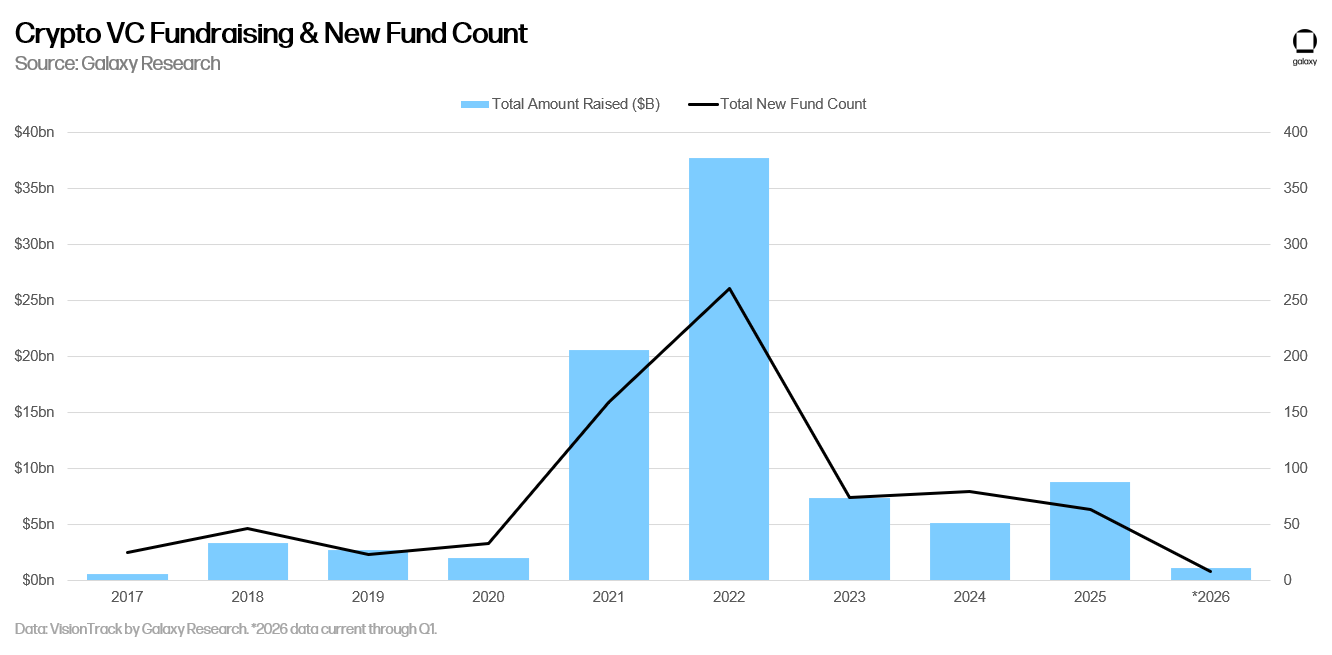
This is the context that makes current announcements legible. Funds deployed through 2025 and 2026 are largely spending capital raised in better years, and they are spending it selectively. When you read that a startup closed a round in this environment, the signal is stronger than the same headline would have carried in 2021 — fewer funds, writing fewer checks, said yes. When new fund formation eventually recovers, expect announcement volume to follow it up, with a lag.
Frequently asked questions
What are the stages of crypto funding rounds?
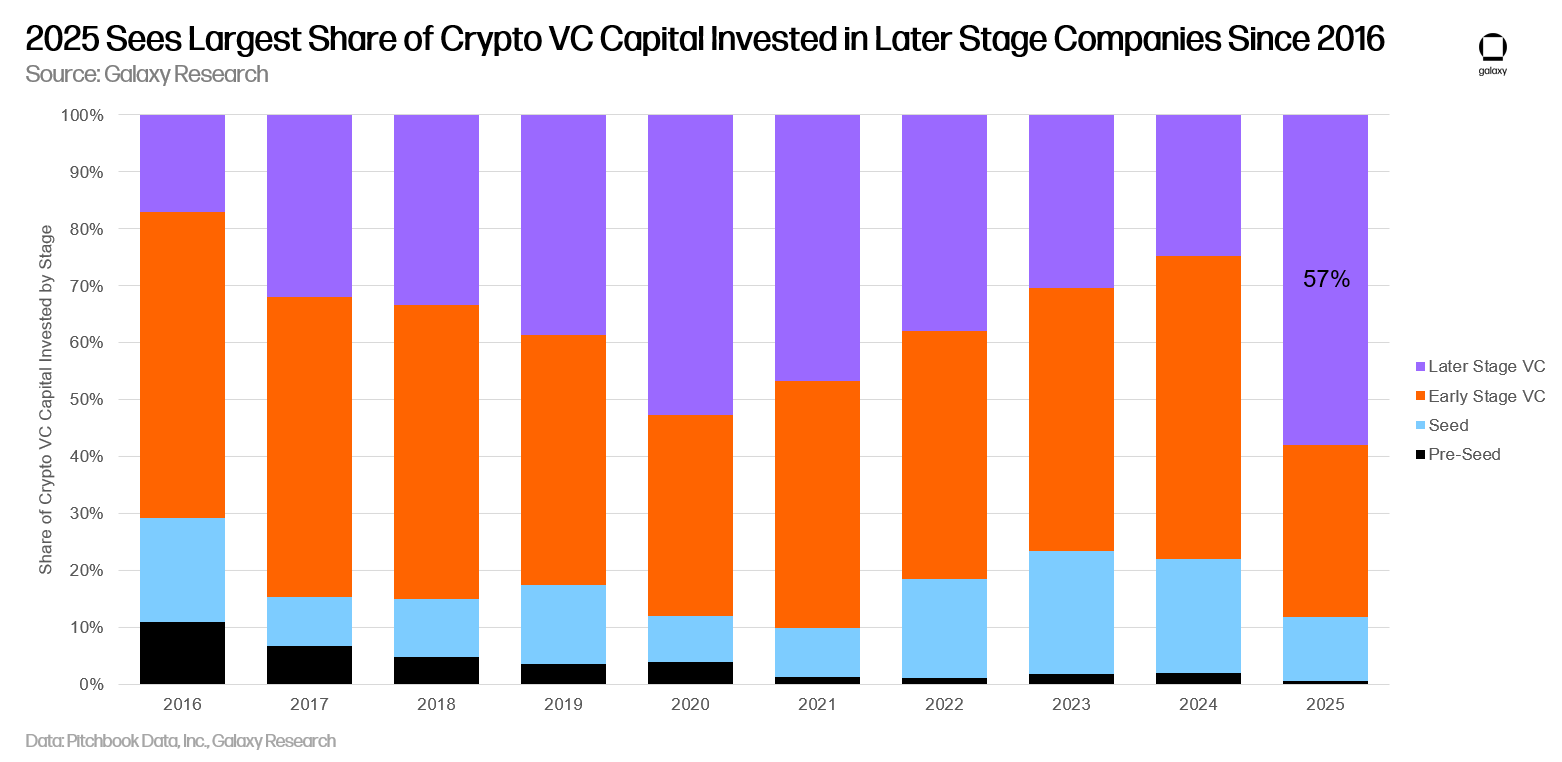
The standard ladder runs pre-seed, seed, Series A, Series B, and later growth rounds. Earlier stages fund teams and prototypes; later stages fund scaled businesses. In Q1 2026, later-stage deals captured about 57% of capital invested while pre-seed deals made up 19% of deal count, per Galaxy Research.
Why do most crypto startups not disclose valuations?
Disclosure is optional and mostly strategic. Galaxy Research had valuation data for only 12% of Q1 2026 deals. Companies publicize valuations that impress recruits and customers, and stay silent when the number is flat, down, or negotiable in the next round.
What does a lead investor actually do?
The lead prices the round, negotiates terms, usually invests the largest amount, and often takes a board seat. Other participants mostly accept the lead's terms. That is why a named, reputable lead is a stronger signal than a long list of participating funds.
Are token rounds the same as equity funding rounds?
No. Equity rounds buy shares in a company; token rounds buy rights to a network's future tokens, often through warrants or side letters attached to an equity deal. Many crypto raises combine both, which is one reason headline amounts can be hard to compare.
How can I verify a crypto funding announcement?
Cross-check the company's claim against the lead investor's own announcement, look for regulatory filings where applicable, and compare the reported round against trackers like Galaxy Research's quarterly data. Treat amounts qualified by "up to," debt components, or token commitments as softer than committed equity.
Sources
Galaxy Research
Galaxy Research
Architect Partners