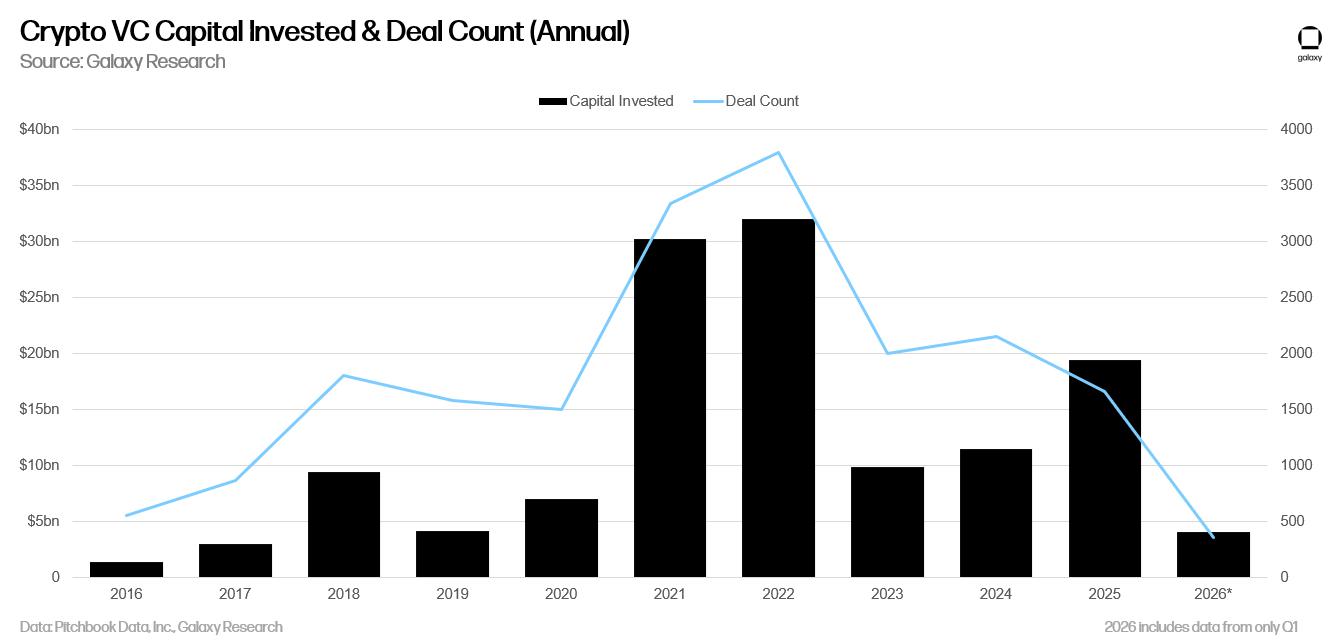
Crypto mergers and acquisitions used to be a footnote. For most of the industry's first decade, the big story was venture funding: who raised, how much, and at what valuation. That has changed. As venture capital concentrates in a smaller number of later-stage companies, buying a company has become a normal way — sometimes the main way — for crypto businesses to grow, and for smaller startups to find a home when the next funding round is not coming.
This guide explains what crypto M&A actually is, why deals happen, what the recent wave of acquisitions looks like, and what an acquisition means in practice if you are a founder, an employee, an investor, or simply a customer of a product that just got bought. We compile figures from Galaxy Research's quarterly venture reports and deal records tracked by Architect Partners, and we link the M&A story back to the funding cycle it grows out of.
Quick solution
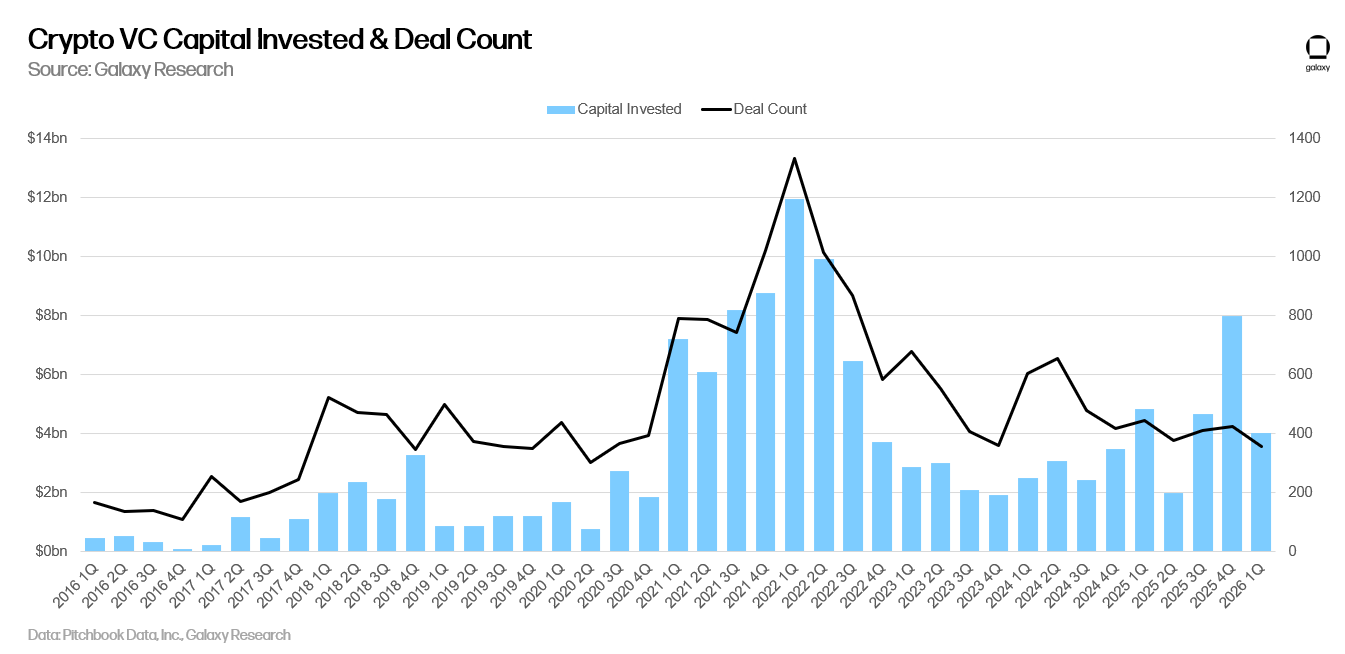
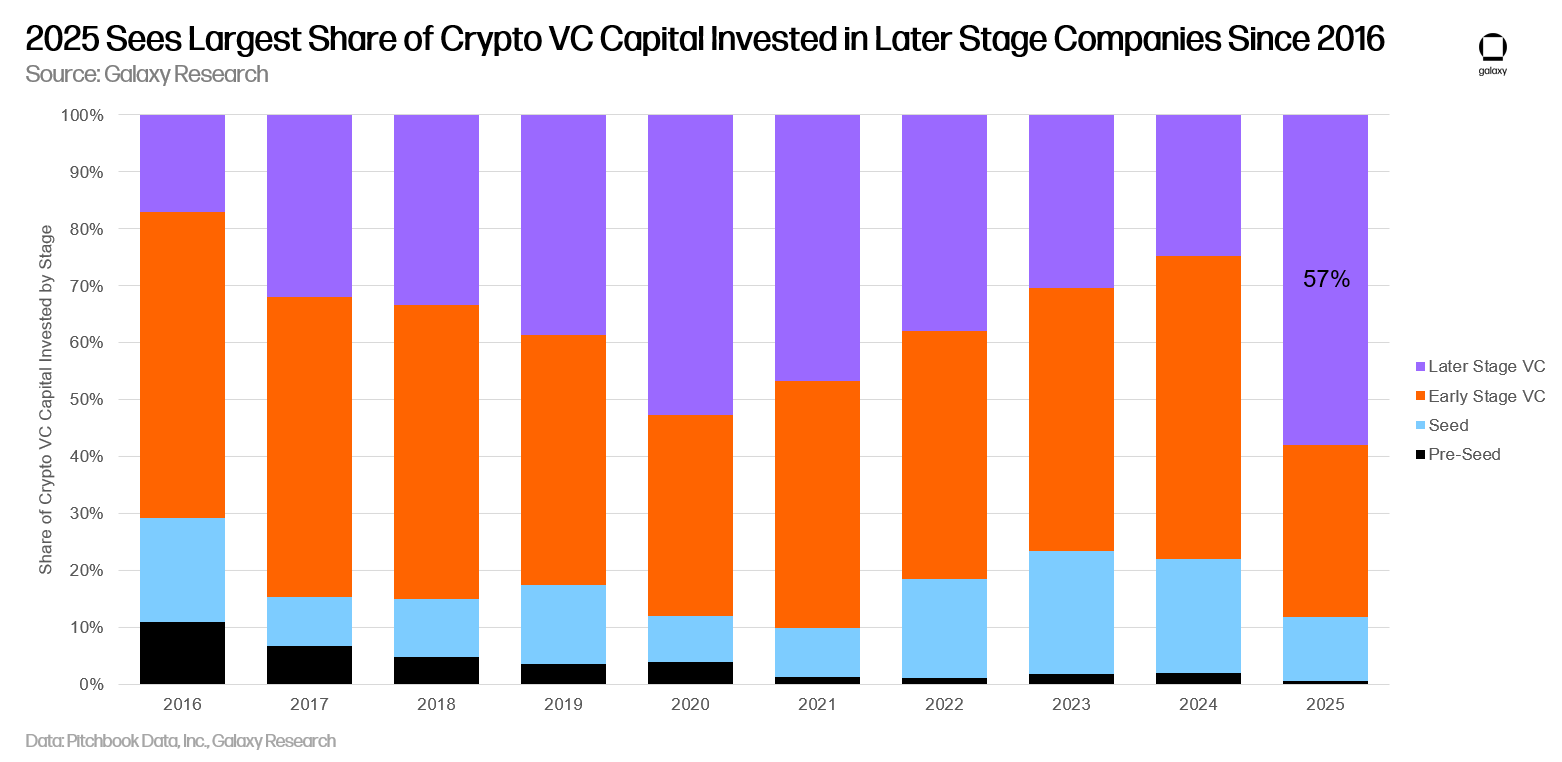
If you just need the short version: a crypto acquisition is one company buying another, usually to get its product, its licenses, its users, or its team faster than building the same thing internally. Deals cluster when venture funding tightens, because startups that cannot raise a next round look for buyers instead. In Q1 2026, crypto companies raised about $4 billion across 355 venture deals, down 50% from the prior quarter, and 57% of that capital went to later-stage companies — conditions that historically push more startups toward being acquired. If a product you use gets acquired, the practical questions are always the same three: does the service keep running, do the terms of service change, and does your data or your assets move to a new legal entity. Check the acquirer's announcement for all three before you act.
M&A stands for mergers and acquisitions. In a merger, two companies combine into one. In an acquisition, one company (the buyer, or acquirer) purchases another (the target) and takes control of it. In crypto, true mergers of equals are rare. Almost every deal you will read about is an acquisition: a larger exchange, infrastructure firm, or fintech buys a smaller startup.
The price can be paid in cash, in the buyer's stock, in tokens, or in a mix. Many crypto deal values are never disclosed, which is one reason M&A gets less press than funding rounds — a $500 million raise makes headlines, while a quiet acquihire of a ten-person wallet team may be a single blog post.
What does the buyer actually get? Depending on the deal, some combination of:
- Technology and product. A working wallet stack, a matching engine, a custody system — things that take years to build and audit.
- Licenses and registrations. Money-transmitter licenses, derivatives registrations, or regional approvals that can take longer to obtain than the technology itself.
- Users and distribution. An installed base of customers, developers, or integrated apps.
- People. Engineering and compliance teams with rare, specialized experience.
That last chart is the quiet engine behind the M&A wave. When most of the money flows to companies that are already large, the companies that are not large need another path. Often that path is a sale.
Why acquisitions replace funding rounds late in the cycle
Crypto M&A activity is tied directly to the venture funding cycle, and the funding cycle has tightened in a specific, measurable way.
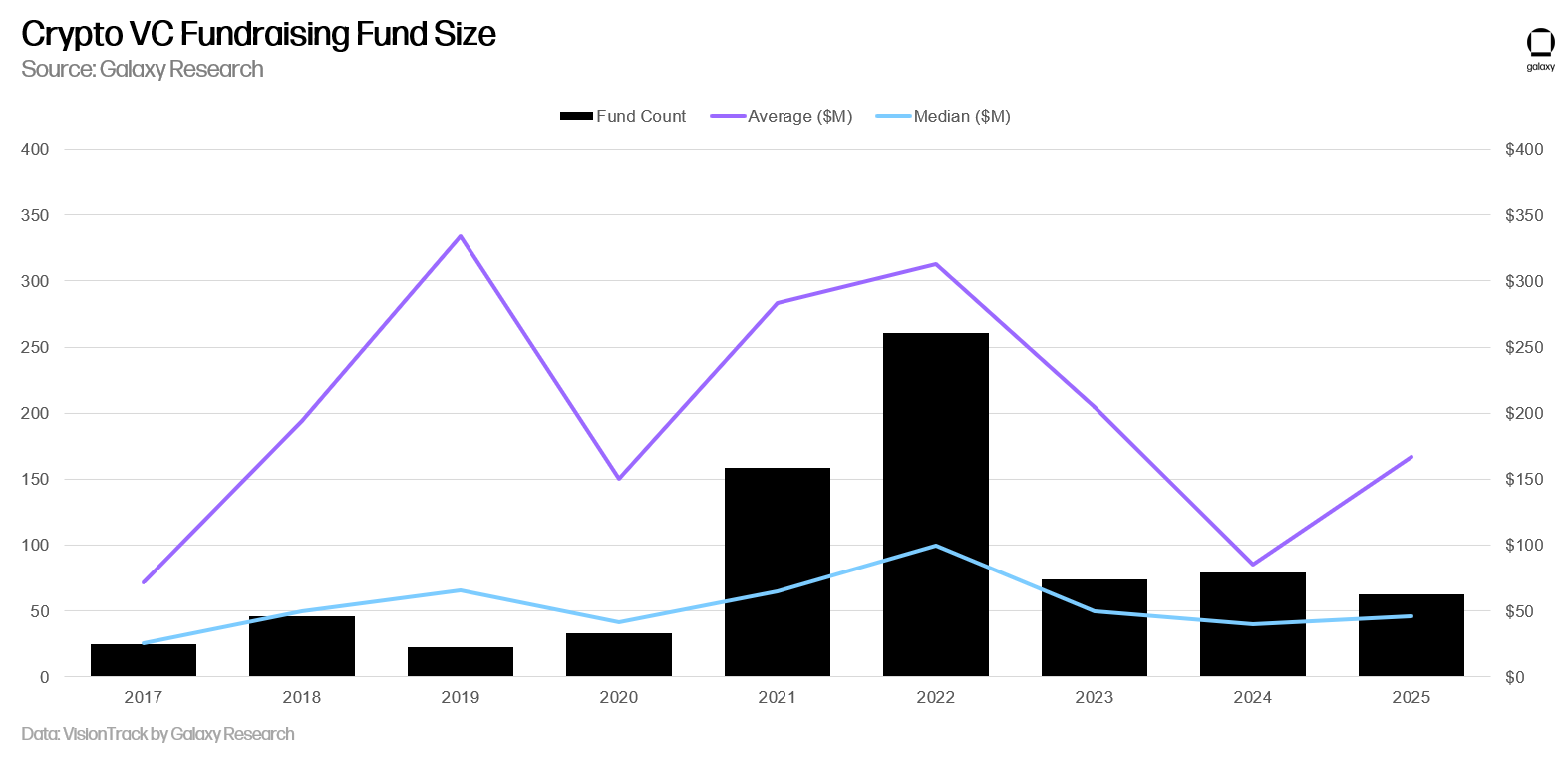
Start with fund formation — the money that venture firms themselves raise before they can invest it. In 2022, crypto venture funds raised roughly $38 billion across about 260 new funds. In 2025, new crypto funds raised less than $9 billion. By Q1 2026, quarterly fundraising had fallen to about $1.1 billion across just 8 funds, the fewest new funds in a quarter since Q3 2020, according to Galaxy Research. Fewer new funds means less fresh capital available for the next generation of startups.
Now look at where the remaining money goes. In Q4 2025, crypto startups raised $8.5 billion across 425 deals — but 11 mega-deals of $100 million or more accounted for roughly 85% of that total. In Q1 2026, total investment fell to about $4 billion, and later-stage companies took 57% of it. Deal count by stage tells the same maturation story from the other side.
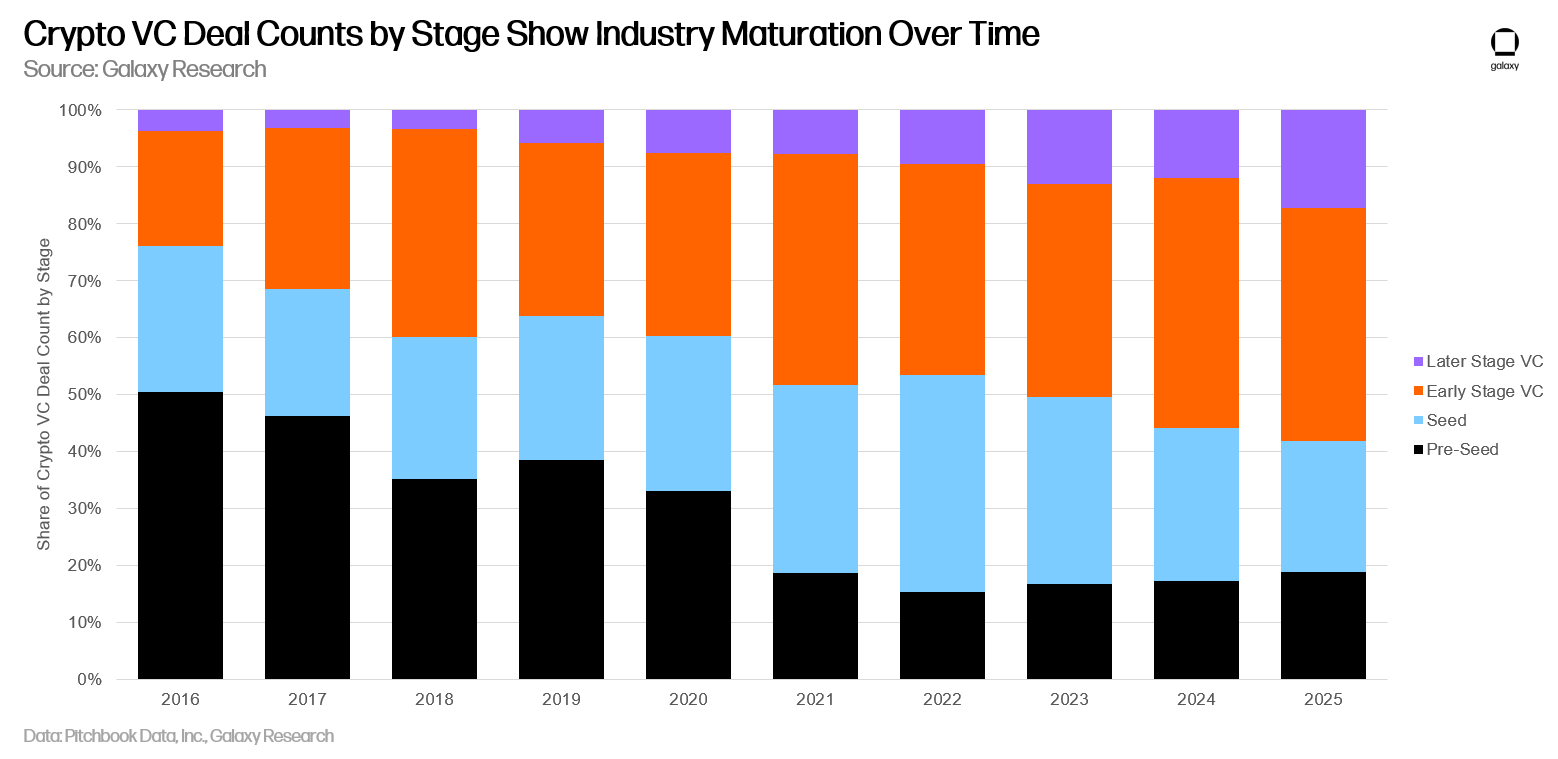
Put the two trends together and the M&A logic writes itself. A seed-funded startup that shipped a real product in 2023 or 2024 faces a Series A market with fewer active funds and investors who prefer larger, later companies. Its choices narrow to three: reach profitability on existing cash, wind down, or sell. For a startup with valuable technology, licenses, or users, selling is often the best outcome for everyone — the team keeps building, users keep their product, and investors in the venture funds that backed it recover some or all of their money.
On the buyer's side, the same cycle creates opportunity. Large, well-funded companies — exchanges above all — can acquire in a down market at prices far below what the same targets commanded in 2021. That is why the most active acquirers in crypto are the biggest balance sheets in the industry.
More in M&A & Consolidation
The main types of crypto acquisitions
Not all deals are alike, and the type of deal tells you most of what you need to know about what happens next. The table below compiles the recurring deal patterns we see across Architect Partners' deal tracking and recent exchange announcements, with what each pattern typically means for the target's users.
| Deal type | What the buyer wants | Typical target | What usually happens to the product |
|---|---|---|---|
| Acquihire | The team | Small startup, often low on cash | Product is sunset; team joins buyer |
| Product tuck-in | A working feature | Focused single-product startup | Product is folded into the buyer's platform |
| Capability buy | Tech plus licenses | Regulated infrastructure firm | Product keeps running under new ownership |
| Market-entry deal | A new region or asset class | Licensed local player | Product continues, rebranded over time |
| Exchange consolidation | Users and volume | Smaller exchange or brokerage | Accounts migrate to the buyer's platform |
| Distressed sale | Assets at a discount | Startup out of runway | Varies; sometimes only IP survives |
The pattern to internalize: the more a deal is about people, the more likely the product dies; the more it is about licenses, users, or a running system, the more likely the product survives. If you are a user of an acquired product, identifying the deal type from the announcement is the fastest way to predict what happens to your account. For exchange customers specifically, we cover that scenario in detail in our guide to what an exchange acquisition means for your account.
Abstract patterns are easier to see through real deals. Here are four from the current cycle, all involving Payward (the parent company of the Kraken exchange), one of the most active acquirers in crypto.
Kraken and NinjaTrader (March 2025). Payward agreed to acquire NinjaTrader, a US retail futures trading platform, in a deal reported at around $1.5 billion — one of the largest crypto-adjacent acquisitions to date. This is a market-entry deal: Kraken bought a regulated derivatives business with an existing customer base rather than building one from scratch. It also shows the direction of travel — crypto companies buying traditional finance firms, not only the reverse.
Kraken and Bitnomial (April 2026). Payward acquired Bitnomial, a CFTC-regulated derivatives exchange. This is a capability buy centered on licenses: Bitnomial held registrations that would take years to obtain directly. The technology matters, but the regulatory perimeter is the asset.
Payward and Reap (May 2026). Payward acquired Reap, a payments infrastructure company, extending the exchange group into card issuance and business payments — a product tuck-in that turns an exchange into a broader financial platform.
Payward and Magic Labs (announced July 27, 2026). Payward agreed to acquire Magic Labs, a wallet-as-a-service company whose embedded-wallet infrastructure had powered more than 60 million wallets for roughly 200,000 developers across about 18,000 apps. Magic Labs had raised about $83 million from investors including PayPal Ventures, Tiger Global, Digital Currency Group, and CoinFund. This is a capability buy with a distribution bonus: Kraken gets audited wallet infrastructure plus a developer network in one transaction. It is also a clean example of the funding-cycle logic above — a well-built, venture-backed infrastructure company reaching scale inside an acquirer rather than through an ever-harder late-stage funding market.
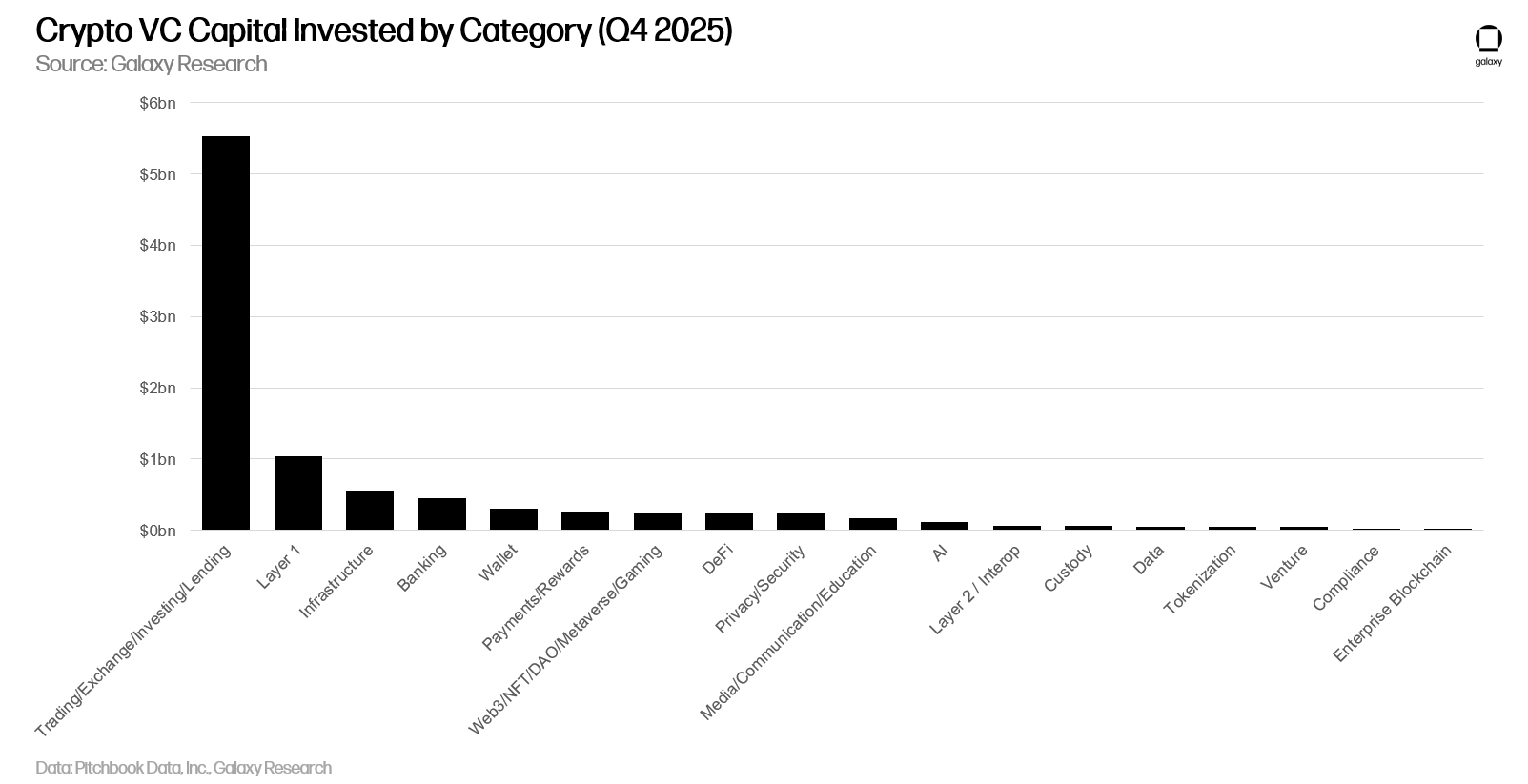
Why are exchanges the buyers in all four? Follow the capital. Galaxy Research's category data for Q4 2025 shows the Trading/Exchange/Investing/Lending category absorbing about $5.5 billion of venture capital — several times more than any other category.
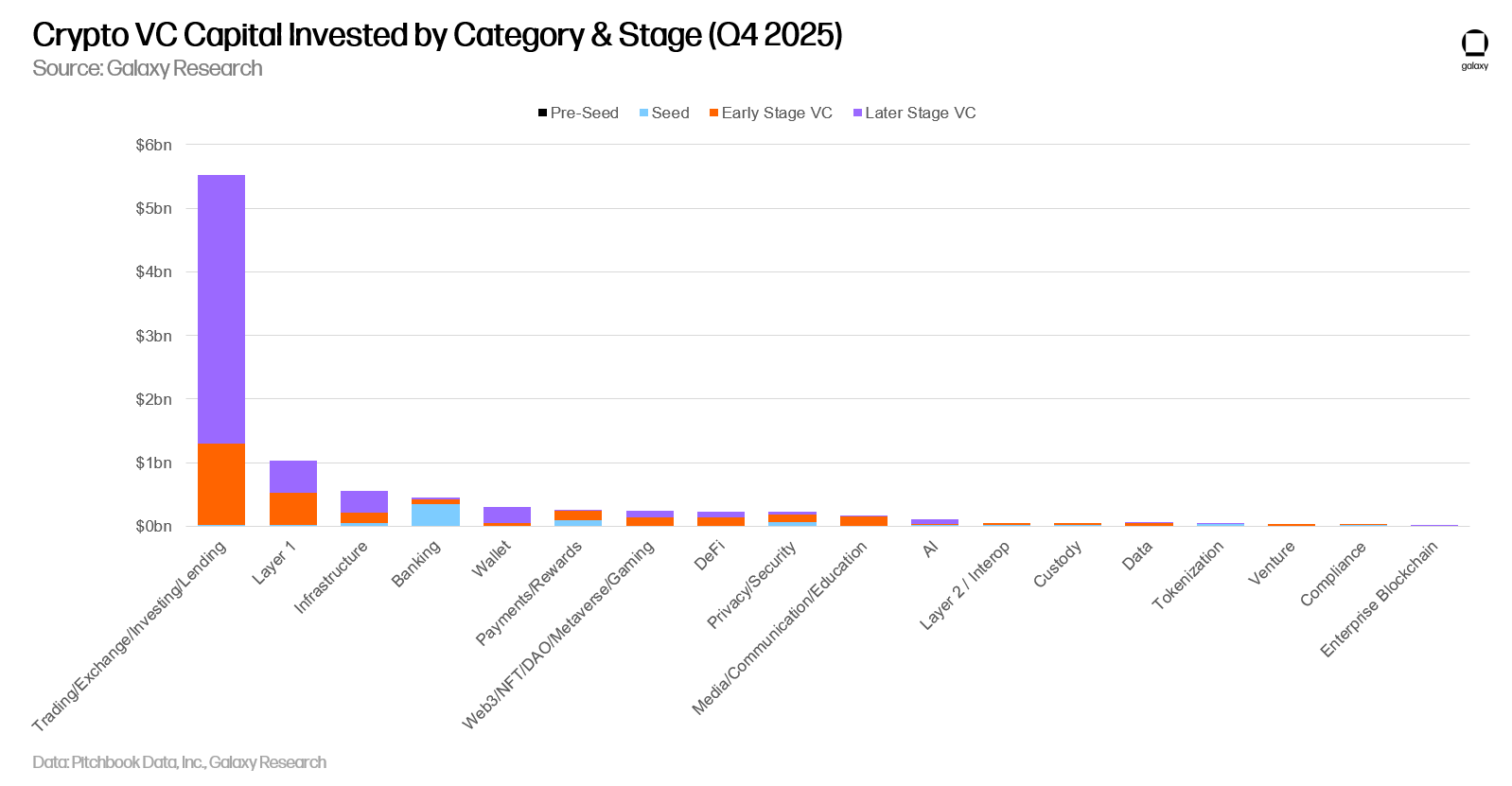
The stage breakdown within categories reinforces it: in Q4 2025, the capital flowing into the trading and exchange category was overwhelmingly later-stage money — mega-rounds into already-large companies like Revolut ($3 billion) and Kraken itself ($800 million). Those raises are, in part, acquisition war chests.
How a crypto acquisition works step by step
Most deals follow the same rough sequence, whether the price is $5 million or $1.5 billion.
1. Approach and framing. Conversations start informally — at a conference, through a shared investor, or through a banker running a process. Sometimes the target is actively for sale; often the buyer initiates.
2. Letter of intent. The parties sign a non-binding letter setting the headline price and structure. Exclusivity usually begins here: the target agrees not to shop itself elsewhere for a set period.
3. Due diligence. The buyer inspects everything: code, security posture, key custody practices, token holdings, licenses, finances, and legal exposure. Crypto diligence has extra layers that traditional deals lack — proof of reserves, smart-contract audit history, and chain-analytics screening of the target's wallets. Our separate guide to crypto due diligence covers what investors and acquirers actually check.
4. Valuation and terms. Price gets set against comparable deals, revenue multiples, and — in a down cycle — how much runway the target has left. A startup with six months of cash negotiates from a very different position than one with three years. How buyers and investors put numbers on crypto companies is its own topic; see our guide to crypto startup valuation for the mechanics.
5. Signing and regulatory review. Definitive agreements are signed. Deals involving licensed entities — exchanges, derivatives platforms, payment firms — typically need regulator sign-off before closing, which can add months.
6. Closing and integration. Ownership transfers. Integration is where deals succeed or fail: migrating users, merging teams, and deciding which products live and which are sunset. Announcements are written on day one; outcomes are determined in the following eighteen months.
If a product you use gets acquired, work through four questions in order.
Does the service keep running? Read the announcement for concrete commitments. "We will continue to support existing customers" with a date attached is meaningful. Silence about the product, with heavy emphasis on the team joining the acquirer, usually signals a sunset.
Who holds your assets now? If the target custodied funds for you, an acquisition means a new legal entity will eventually stand behind that custody. The terms of service will be updated; the jurisdiction may change. You will typically be asked to accept new terms — that is the moment to actually read them.
Does your data move? Customer data transfers to the acquirer in nearly every deal. If you gave the target KYC documents, the buyer now has them. Privacy policies must disclose this, and in most jurisdictions you will be notified.
Do integrations break? If you are a developer building on an acquired API — as 200,000 developers were with Magic Labs — watch for deprecation timelines. Acquirers commonly honor existing API contracts for a transition period, then migrate everyone to their own stack.
For most users, the honest answer is that a well-run acquisition changes little day to day. The risk concentrates in distressed sales, where continuity promises are weakest.
Whether you are a founder weighing an offer, an investor tracking the space, or a user of an acquired product, the same errors repeat across cycles:
- Reading the headline price as the real price. Announced values often include earnouts tied to future performance and stock that vests over years. The cash that changes hands on day one can be a fraction of the headline number.
- Assuming an acquisition is a failure. In a market where later-stage capital takes 57% of funding, a sale to a strong acquirer is frequently the best available outcome — for the team, the users, and the investors. Judging every deal as a rescue misreads the cycle.
- Ignoring the deal type. An acquihire and a capability buy have opposite implications for the product you rely on. Five minutes classifying the deal from the announcement beats speculating on social media.
- Doing nothing with custodied assets during a distressed sale. If a struggling platform holding your funds announces a sale, do not wait for integration to finish. Withdrawals during an orderly transition are routine; withdrawals after a failed one may not be.
Who tracks crypto M&A and why
Different readers need different slices of this market:
"We are a crypto startup that has product-market fit but a hard Series A market ahead of us. We track acquirers in our category so that if a raise fails, our banker's first call list is already built." For this founder, the fund-formation data above is the early-warning system: fewer new funds this year means a thinner round next year.
"We are a fintech compliance team, and our vendor was just acquired by an exchange group. We need to know whether our data-processing agreement survives the change of control." For this team, the deal type and the acquirer's regulatory posture matter more than the price.
"We are a family office with positions in several crypto venture funds. M&A exits are how our funds return capital in a market with few IPOs, so we read the quarterly deal tallies as closely as the funding tallies." For this investor, acquisition volume is a health metric for the whole venture pipeline.
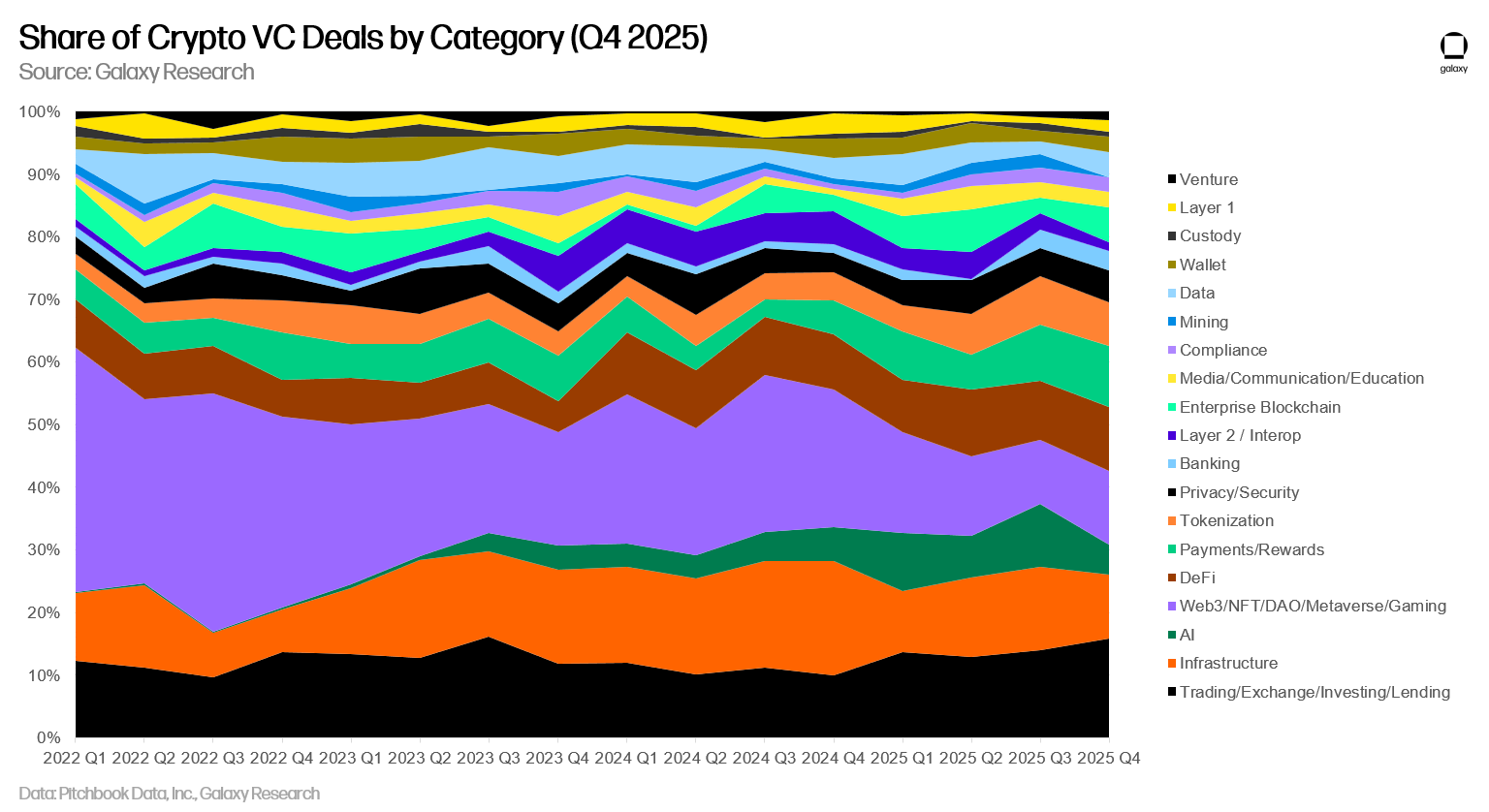
One more lens on that pipeline: where deals happen by category has been shifting for years. Infrastructure and trading deals have grown as a share of activity while Web3 and NFT deal share has shrunk — a preview of where tomorrow's acquisition targets are being founded today.
Frequently asked questions
Are crypto acquisitions usually paid in crypto?
Rarely. Most deals are paid in cash, the acquirer's equity, or a mix of both. Token-based consideration exists but creates messy tax and securities questions for both sides, so even crypto-native acquirers generally prefer conventional structures. What is common is that the target's own token holdings are part of the assets being valued and transferred.
Do regulators have to approve crypto acquisitions?
Often, yes. Deals involving licensed entities — exchanges, derivatives platforms, money transmitters, banks — typically require approval from the relevant regulators before closing, and a change of control can trigger fresh fit-and-proper reviews of the new owners. Deals between unlicensed software companies face fewer gates, though large deals anywhere can draw antitrust review.
What happens to a startup's token if the company is acquired?
It depends on what the token does and what the buyer wants. If the token is core to a live protocol, the acquirer may commit to supporting it, take over its treasury, or gradually migrate functionality to its own systems. If the token was peripheral, it often fades. The announcement and the project's governance forum are the places to look for concrete commitments — the token's market price on deal day is noise, not signal.
Why did crypto M&A pick up while venture funding fell?
Because the two are connected by supply and demand. Falling fund formation and later-stage concentration mean fewer startups can raise their next round, which increases the supply of willing sellers. Meanwhile the largest platforms raised mega-rounds and can buy at down-market prices, which increases demand from buyers. Galaxy Research's data shows both halves: $1.1 billion raised by just 8 new funds in Q1 2026, while 2025's biggest venture rounds went to the exchange groups doing the acquiring.
How can I tell if an acquisition is good or bad for a product I use?
Classify the deal. If the buyer emphasizes the team and says little about the product, expect a sunset. If the buyer bought licenses, infrastructure, or users, expect continuity — the product is the point. Then verify over time: an acquirer that publishes migration timelines, honors API contracts, and keeps support responsive is integrating well. And regardless of deal type, if the target custodies assets for you, make sure you can pass a withdrawal test before and after the transition.
Sources
Galaxy Research, "Crypto & Blockchain Venture Capital – Q4 2025" (February 3, 2026)
Galaxy Research, "Crypto & Blockchain Venture Capital – Q1 2026" (May 28, 2026)
Architect Partners, "Crypto M&A Snapshot" (August 2026)